
Bakteriophagen
  • Mehr
    • What Are Bacteriophages or Phages
    • The Problem with Antibiotics
  • Phagentherapie
    • Phage therapy for abscesses and surgical wounds
    • Phage therapy for bronchial asthma
    • Phage Therapy for Cystitis or Urinary Tract Infection
    • Phage therapy for chronic wounds
    • Phage therapy for disturbed gut flora or dysbiosis
    • Phage Therapy in Animals
    • Phage therapy for bone inflammation or osteomyelitis (osteitis)
    • Phage Therapy for Middle Ear Infection (Otitis media)
    • Phage therapy for cystic fibrosis
    • Phage Therapy for Sinusitis
  • Forum
  • Phagen-News
  • English
    • German
    • French
    • Italian
    • Dutch
    • Spanish
  • Click to open the search input field Click to open the search input field Search
  • Menu Menu
Blog – Current Topics on Bacteriophages
You are here: Home1 / Blog – Current Topics on Bacteriophages2 / Bacteriophages3 / Bacteriophages and Biofilm
Bacteriophages

Bacteriophages and Biofilm
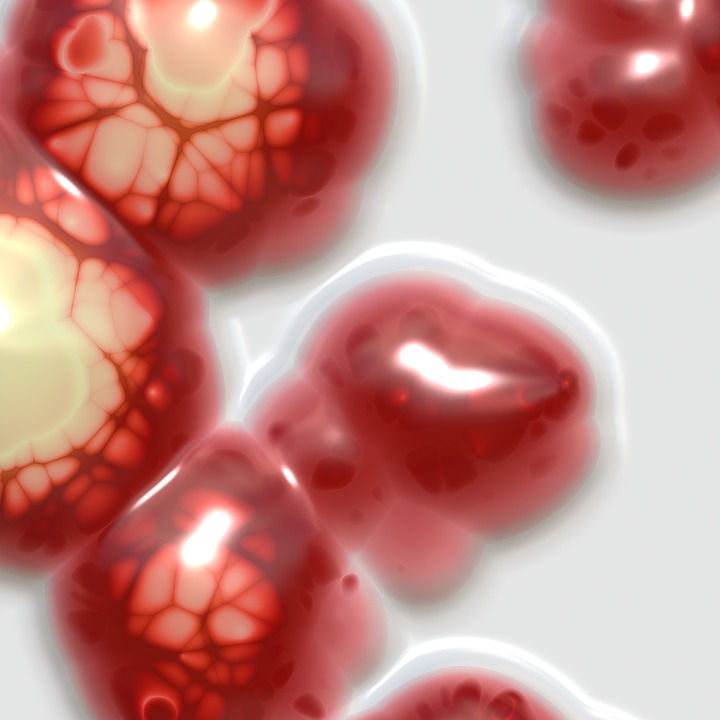
Biofilms are an extremely common adaptation that allows bacteria to colonize hostile environments. They present unique challenges for antibiotics and biocides, due both to the nature of the extracellular matrix and the presence of metabolically inactive persistent cells within the biofilm. Such chemicals can be highly effective against planktonic bacterial cells while remaining essentially ineffective against biofilms. In contrast, bacteriophages appear to have a greater ability to combat this widespread form of bacterial growth. The high density of bacteria in biofilms facilitates the action of bacteriophages by enabling rapid and efficient host infection and subsequent amplification of the bacteriophage. Bacteriophages also possess a range of properties that make biofilms susceptible to their action. They are known to produce (or can induce) enzymes that degrade the extracellular matrix. They are also capable of infecting persistent cells that remain dormant within them but are reactivated when they become metabolically active. Some cultured biofilms also appear better able to support bacteriophage replication than comparable planktonic systems. It is perhaps not surprising that bacteriophages, as natural predators of bacteria, possess the ability to combat this common form of bacterial life.

In early studies demonstrating the potential of bacteriophages for biofilm control, Hanlon et al. [24] found that Pseudomonas aeruginosa bacteriophages could destroy bacteria in a mature (20-day-old) biofilm and (perhaps surprisingly given their size) could even diffuse through the thickest (12%) alginate gel studied, although diffusion was slower than through thinner alginate gels. Hanlon also observed that the bacteriophages studied could directly degrade the alginate polymer, apparently via a bacteriophage-borne enzymatic activity, although this was not identified. Regardless of the activity, it differed significantly from the highly restricted tail spike proteins.

Sillankorva et al. utilized bacteriophages from both Pseudomonas fluorescens and Staphylococcus lentus, demonstrating the effective reduction of single-species and mixed biofilms using these agents. Both bacteriophages were fully sequenced, and it was shown that neither encoded a polysaccharide depolymerase (although the Pseudomonas fluorescens bacteriophage encoded an endopeptidase). Similarly, Doolittle et al. [25] showed that the Escherichia coli T4 bacteriophage spreads efficiently through a biofilm, even though it encodes no other polysaccharide depolymerases except for a very restricted tail spike protein that is only released from the bacteriophage tail during host cell penetration. However, Doolittle et al. [25] also worked with the Pseudomonas aeruginosa bacteriophage E79 and showed that it was less effective at penetrating biofilms than T4.

While it is clear that naturally occurring bacteriophages can penetrate biofilms even when they do not produce polysaccharide depolymerases (or when these have a very limited function), not all studies have shown efficient infection within biofilms, and some researchers continue to believe that EPS-degrading enzymes are necessary for biofilm applications.

Tait et al. reported that a mixture of three bacteriophages could completely eliminate a single-species biofilm, but that this was less effective when other, insensitive bacterial species were present. Kay et al. [27] also showed that mixed biofilms can diminish the effectiveness of bacteriophages. Nevertheless, Sillankorva et al. [1] demonstrated that efficiency in model biofilms can be high even when a bacteriophage targets a single bacterial species, stating that “phages can be adopted as a method for killing a specific bacterium even when its host lives in a mixed consortium.” Sillankorva et al. [1] also showed that mature (seven-day-old) biofilms can be effectively controlled using bacteriophages.

It is therefore clear that natural bacteriophages can and often do express enzymes capable of disrupting biofilms, but that these do not appear to be essential for infectivity in this situation. The potential for the induction of such enzymes from the host genome is, of course, much more difficult to identify.

Bacteriophages possess unique properties and show great promise in the control of biofilms. However, such applications are still evolving, and large-scale applications are still under development. Therefore, the identification of the most effective approaches must currently remain speculative. Over time, and as more results are published, best practices for such applications will naturally emerge.

Translation of the source:
https://www.ncbi.nlm.nih.gov/pmc/articles/PMC4790368/
Bacteriophages and Biofilms
David R. Harper, Helena M. R. T. Parracho, James Walker, Richard Sharp, Gavin Hughes, Maria Werthén, Susan Lehman, and Sandra Morales1

Share this entry
  • Share on Facebook
  • Share on X
  • Share on WhatsApp
  • Share on Pinterest
  • Share on LinkedIn
  • Share on Tumblr
  • Share on Vk
  • Share on Reddit
  • Share by Mail
https://www.phage.help/wp-content/uploads/2020/01/organic-1002894_960_720.jpg 720 720 Martin https://www.phage.help/wp-content/uploads/2024/02/phage-help2-300x99-1.png Martin2020-01-27 14:58:452020-01-27 14:58:45Bacteriophages and Biofilm

Neueste Foren einträge

  • Wo kann man Bakteriophagen kaufen?
  • Dosierung und Einnahmedauer
  • Phagen für den Hund Nasenschleimhaut Entzündung Lungen Herz
  • Viele Fragen :-)
  • Erfolgreiche Phagentherapie

Categories

  • Bacteriophages
  • Multidrug resistance
  • Treatments
  • Unkategorisiert

Archives

  • May 2026
  • March 2026
  • February 2026
  • March 2024
  • February 2024
  • October 2023
  • September 2023
  • June 2023
  • March 2023
  • November 2022
  • October 2022
  • November 2021
  • July 2021
  • June 2021
  • May 2021
  • April 2021
  • February 2021
  • January 2021
  • December 2020
  • November 2020
  • October 2020
  • September 2020
  • August 2020
  • July 2020
  • June 2020
  • May 2020
  • April 2020
  • March 2020
  • February 2020
  • January 2020
  • December 2019
  • November 2019
  • October 2019
  • September 2019
  • August 2019
  • July 2019
  • June 2019
  • May 2019
  • April 2019
  • March 2019
  • February 2019
  • January 2019
  • December 2018
  • January 2018

Unterstütze uns auf Facebook


HINWEIS: Phage.help behandelt eine Gesundheitsthema.
Verwenden Sie Informationen von Phage.help nicht als Grundlage für gesundheitsbezogene Entscheidungen und treffen Sie keine Selbstdiagnosen. Die Artikel auf Phage.help dienen der allgemeinen Information über ein Gesundheitsthema, nicht der Beratung im Falle individueller Anliegen.

Bei gesundheitlichen Beschwerden konsultieren Sie bitte Ihren Arzt oder Zahnarzt. Nur eine individuelle Untersuchung kann zu einer Diagnose und Therapieentscheidung führen.

Categories

  • Bacteriophages
  • Multidrug resistance
  • Treatments
  • Unkategorisiert

Teile deine Erfahrungen – Hol dir Infos im Phage.help Forum

    • Topic
    • Voices
    • Posts
    • Last Post
    • Wo kann man Bakteriophagen kaufen? 1 2 … 4 5

      Started by: Manuel in: Bakteriophagen

    • 33
    • 61
    • 2 years ago

      Coco

    • Zistytis mit e.coli

      Started by: Serba in: Bakteriophagen

    • 1
    • 1
    • 9 months, 3 weeks ago

      Serba

    • Viele Fragen :-) 1 2

      Started by: Matthias24 in: Bakteriophagen

    • 11
    • 23
    • 11 months ago

      Haumea2010

  •  

© Copyright - Bakteriophagen -
Impressum | Datenschutzerklärung | EU-Cookie-Richtlinie
  • Link to Facebook
Link to: New Insights into the Gut Microbiota Link to: New Insights into the Gut Microbiota New Insights into the Gut Microbiota Link to: Bacteriophages and Biofilm Link to: Bacteriophages and Biofilm Bacteriophages and Biofilm
Scroll to top Scroll to top Scroll to top
Cookie-Zustimmung verwalten
Wir verwenden Technologien wie Cookies, um Geräteinformationen zu speichern und/oder darauf zuzugreifen. Wir tun dies, um das Browsing-Erlebnis zu verbessern und um (nicht) personalisierte Werbung anzuzeigen. Wenn du nicht zustimmst oder die Zustimmung widerrufst, kann dies bestimmte Merkmale und Funktionen beeinträchtigen.
Funktional Always active
Die technische Speicherung oder der Zugang ist unbedingt erforderlich für den rechtmäßigen Zweck, die Nutzung eines bestimmten Dienstes zu ermöglichen, der vom Teilnehmer oder Nutzer ausdrücklich gewünscht wird, oder für den alleinigen Zweck, die Übertragung einer Nachricht über ein elektronisches Kommunikationsnetz durchzuführen.
Vorlieben
Die technische Speicherung oder der Zugriff ist für den rechtmäßigen Zweck der Speicherung von Präferenzen erforderlich, die nicht vom Abonnenten oder Benutzer angefordert wurden.
Statistiken
Die technische Speicherung oder der Zugriff, der ausschließlich zu statistischen Zwecken erfolgt. Die technische Speicherung oder der Zugriff, der ausschließlich zu anonymen statistischen Zwecken verwendet wird. Ohne eine Vorladung, die freiwillige Zustimmung deines Internetdienstanbieters oder zusätzliche Aufzeichnungen von Dritten können die zu diesem Zweck gespeicherten oder abgerufenen Informationen allein in der Regel nicht dazu verwendet werden, dich zu identifizieren.
Marketing
Die technische Speicherung oder der Zugriff ist erforderlich, um Nutzerprofile zu erstellen, um Werbung zu versenden oder um den Nutzer auf einer Website oder über mehrere Websites hinweg zu ähnlichen Marketingzwecken zu verfolgen.
  • Manage options
  • Manage services
  • Manage {vendor_count} vendors
  • Read more about these purposes
Einstellungen ansehen
  • {title}
  • {title}
  • {title}
  • Deutsch
  • English
  • Français
  • Italiano
  • Nederlands
  • Español