This gene makes Salmonella resistant to all antibiotics

“Antibiotics were undoubtedly one of the most important medical developments of the 20th century. At the same time, however, they are becoming one of the great challenges of the 21st century. Thanks to very loose prescription practices for human patients as well as extensive use of antibiotics in animal husbandry, so-called multi-drug resistant bacteria are now rampant worldwide—especially in industrialized nations with excellent medical care. These are pathogens that are immune to many antibiotics. In the USA, a bacterial gene has now been found for the first time that confers resistance to so-called ‘last resort’ antibiotics, i.e., the most effective and strongest existing antibiotics.

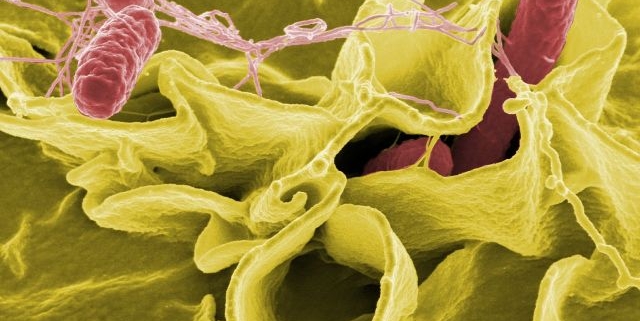
Salmonella are bacteria associated with food poisoning. Normally, a Salmonella infection is usually a matter of patience—eventually, it disappears again. Not dangerous, but unpleasant. The situation is different for particularly young or old people, as well as people with weakened immune systems. For them, Salmonella infections can be a risk, which is why antibiotics are frequently prescribed.

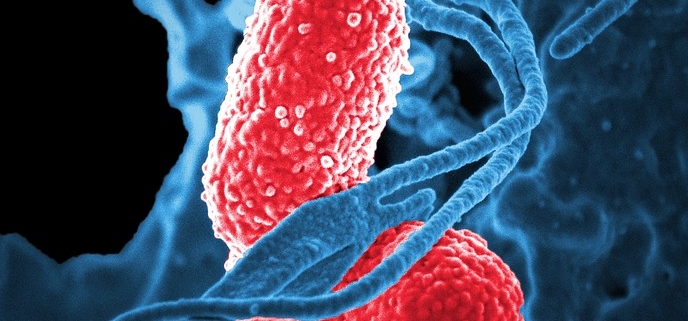
And here we come to a problem: like many other bacteria, Salmonella have also developed resistance to most antibiotics. More precisely, to pretty much all except colistin, an antibiotic that is now considered the last drug treatment option for Salmonella infections. And now it looks as if this drug will not be effective for much longer either. Researchers in the USA have discovered a gene that gives Salmonella the ability to defend itself against colistin. This makes the bacterium virtually untreatable with antibiotics.

Gene originates from China
The gene is known as mcr-3.1 and has been on the watchlist of many scientists for years. Now it appears to have surfaced in the USA for the first time.

“Public health officials have known about this gene for some time. In 2015, they saw that mcr-3.1 had moved from a chromosome to a plasmid in China, which paves the way for the gene to be transmitted between organisms. For example, E. coli and Salmonella are in the same family, so once the gene is on a plasmid, that plasmid could move between the bacteria and they could transmit this gene to each other. Once mcr-3.1 jumped to the plasmid, it spread to 30 different countries, although not – as far as we knew – to the US,” says Siddhartha Thakur, one of the authors of the study.

The gene was discovered during routine screenings used to identify new multi-drug resistant bacterial strains. The mcr-3.1 gene was found in a stool sample taken back in 2014 from a patient who contracted a Salmonella infection in China. Theoretically, the gene is capable of transferring to the significantly more dangerous E. coli bacterium.

The spread of this gene is another step toward super-resistant bacteria. However, new antibiotics are constantly being developed, and research is also being conducted into other treatment methods for multi-drug resistant bacteria.”


Source: https://www.trendsderzukunft.de/medizin-dieses-gen-laesst-salmonellen-resistent-gegen-alle-antibiotika-werden/amp/
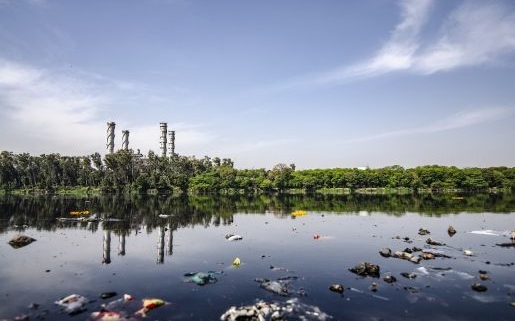

Antibiotics Contaminate Rivers Worldwide

“The research team searched for residues of 14 commonly prescribed antibiotics in rivers from 72 different countries. Antibiotics were found in almost two-thirds of the samples.

Dangerous pollution levels were measured particularly frequently in Asia and Africa. The researchers determined the worst value in a river in Bangladesh: the concentration of the drug metronidazole, which is used for infections with bacteria and parasites, exceeded the safety value by three hundred times. However, the measured residues in Kenya, Ghana, Pakistan, and Nigeria were also alarming. (….)

The most widespread pharmaceutical substance was trimethoprim, which is prescribed for bladder infections, for example. The antibiotic could be detected at 43 percent of the examined sites. The antibiotic that most frequently exceeded the limit value was ciprofloxacin, which is used for certain infections of the respiratory tract or genital tract, for example.”

Source and more at: https://www.srf.ch/article/17242869/amp

Pills instead of a doctor’s visit

“Your own child has a fever, is in pain, is coughing—what should you do? Seeing a doctor would be advisable, but for parents in Kenya’s slums this is often not possible. Instead, they buy cheap antibiotics—with dangerous consequences.”

Rose Midecha does not know what to do anymore. Her little baby, Collins, has been ill for three months. Without a break. He coughs and sneezes. Midecha keeps giving him medication. “I went to the pharmacy and bought antibiotics,” says the 37-year-old. When they ran out, he was still unwell, so she got new ones for him. But they only relieve the symptoms briefly, and then Collins becomes seriously ill again. Before long, his mother will reach for the next antibiotic.

Midecha lives with her two children in the Mathare slum in Nairobi. Hygiene conditions in the poor neighborhoods are bad—there is rubbish on the streets, often also feces. Access to clean water is limited, and there are no functioning drainage systems. Added to this is the high population density. Bacteria spread easily here and cause illness. Antibiotics are often used to treat these illnesses.

Life in the Mathare slum in Nairobi: There are no pharmacies in the traditional sense. Instead, medicines are often sold without restrictions in corrugated-metal shacks. (….)

A study in the Kibera low-income neighborhood in Nairobi found that between 70% and 87% of the households surveyed had taken antibiotics within a year. By comparison, a study found that in Brandenburg, antibiotics were prescribed in an average of 6.5% of households in one year.

Midecha gets the antibiotics from the local vendors around the corner. They operate out of small corrugated-metal huts with a selection of medicines. In most cases, the vendors have no pharmaceutical training—often not even a sales license. Here, antibiotics are inexpensive and easily available without a prescription. Midecha has no other option. “I would go to the hospital, but I can’t. If I get work, I have to take it,” says the single mother.

“If I spend the whole day waiting at the hospital, who will earn the money even just for my children’s porridge?” Midecha asks. In addition, the hospital visit itself costs money—and Midecha does not have it. She works as a domestic helper, earning just enough for the rent on her shack, food, and childcare. (….)

In addition to the high consumption of antibiotics in Mathare or Kibera, the medicines are often of poor quality or used incorrectly. All of this promotes resistance. “The low-income neighborhoods are a hotspot for antibiotic resistance,” says Sam Kariuki, Director of Research and Development at the Kenya Medical Research Institute (KEMRI). According to the researcher, bacteria are present in the environment and pass resistance on to one another. “When many antibiotics are then given—of varying quality, or even counterfeit—these neighborhoods become like an incubator for resistant bacteria.”

In Kenya, hospitals are feeling the growing problem. At Kijabe Hospital, staff have observed for more than ten years that the rate of resistant bacteria is increasing. They have developed new treatment standards and monitor resistance much more closely so that they still have effective medicines available.”


Source: https://www.tagesschau.de/ausland/kenia-nairobi-antibiotikaresistenz-101.html
By Caroline Hoffmann, ARD Studio Nairobi

Sharp rise in antibiotic-resistant pathogens in India

In India, the spread of antibiotic-resistant pathogens is increasing sharply. This was reported by Sebastian Manns, correspondent for ARD radio in New Delhi, and by Indian media on June 5, 2019.

A study by the Indian health authorities found that two thirds of the people tested had bacteria in their bodies that no longer respond to antibiotic treatment.

In Germany, studies put the figure at around 10% of the population. In Europe, there are said to be around 33,000 deaths each year due to antibiotic resistance.

Heavy use in livestock farming

However, the proportion is significantly higher among people who work in agriculture—especially in livestock farming—at around 21%.
This is because antibiotics are often used in livestock farming to prevent outbreaks of epidemics.

Source and more: https://www.msn.com/de-de/nachrichten/wissenundtechnik/starke-zunahme-antibiotikaresistenter-keime-in-indien/ar-AACrm3z

Antibiotics are contaminating rivers worldwide

The research team looked for residues of 14 commonly prescribed antibiotics in rivers from 72 different countries. Antibiotics were found in almost two thirds of the samples.

Three medicines stand out

Dangerous levels of pollution were measured particularly often in Asia and Africa. The worst value was found by the researchers in a river in Bangladesh: the concentration of the drug metronidazole, which is used to treat infections with bacteria and parasites, exceeded the safety threshold by 300 times. However, the measured residues in Kenya, Ghana, Pakistan and Nigeria were also said to be alarming.

The most widespread active substance was trimethoprim, which is prescribed, for example, for bladder infections. The antibiotic was detected at 43% of the sites examined. The antibiotic that most frequently exceeded the limit was ciprofloxacin, which is used, for example, for certain infections of the respiratory tract or the genital tract.

Risk of resistant germs

As recently as April, the UN warned of the danger of microbial resistance and spoke of a “global crisis”. According to the report, around 700,000 people already die today as a result of drug-resistant diseases. By 2050, this figure could rise to ten million deaths per year, assuming the worst-case scenario and if nothing is done to counter it.

Alistair Boxall also says it is absolutely necessary to invest in suitable wastewater treatment infrastructure and to clean up rivers that are already contaminated: “Solving the problem will be a mammoth task.”


Source: https://www.srf.ch/article/17242869/amp

Killer Bacteria: Death Toll from Antibiotic Resistance Rises

They have such appetizing names as Escherichia coli, Staphylococcus aureus, Enterococcus faecalis and Enterococcus faecium, Streptococcus pneumoniae, or Acinetobacter spp.

And they are modern killers that are claiming more and more lives. They are successful because they are resistant to antibiotics.

In the EU and the countries of the European Economic Area alone, the number of deaths attributable to antibiotic resistance against the deadliest bacteria rose from 11,114 in 2007 to 27,249 based on 10 microbial pathogens (for comparability with 2007), or 33,110 based on 16 microbial pathogens in 2015. This result is found in a new study by Alessandro Cassini and 16 co-authors—a true authorial gathering.

Based on data from the European project “EARS”—European Antimicrobial Resistance Surveillance Network—the authors calculated mortality and years of life lost due to premature death attributable to specific antibiotic-resistant bacteria. The latter is a statistical gimmick associated with too many uncertainties to be interpreted meaningfully. Deaths, on the other hand, are tangible, which is why we refer to the results of the author collective on the subject of mortality resulting from antibiotic resistance.

  • The authors calculated 671,689 infections for the year 2015.
  • 33,110 infections resulted in death.
  • The mortality rate per infection is thus 4.9%.
  • 63.5% of the infections occurred in a hospital or another institution that is actually intended for recovery.
  • 72.4% of the 33,110 fatalities (23,976) succumbed in hospitals to the consequences of an infection they had only contracted while in the hospital.

Source: https://sciencefiles.org/2019/04/07/killer-bakterien-zahl-der-toten-durch-antibiotika-resistenz-steigt/

Antibiotic Resistance in the Arctic

Antibiotic Resistance in the Arctic

We are now finding the effects of excessive antibiotic use even in the Antarctic. Researchers have detected hundreds of different resistance genes in the soil in Antarctica. This gene confers resistance to antibiotics on bacteria. Even the super-gene blaNDM-1, which was detected in India a few years ago, was found. This demonstrates how quickly resistance is spreading worldwide.

Antibiotics are becoming ineffective as multi-resistant pathogens that are immune to several classes of antibiotics develop worldwide. These multi-resistant pathogens are now found not only in humans and animals but also in soil and water.

The multi-resistant “superbug” NDM-1 strain is particularly dangerous.
This strain was discovered in India a few years ago and is immune to all common classes of antibiotics and emergency antibiotics of the carbapenem group. This resistance is caused by the blaNDM-1 gene.

A research group led by David Graham from Newcastle University analyzed 40 soil samples taken in 2013 along the Kongsfjorden in northwestern Spitsbergen. Multi-resistant pathogens are now found even in this pristine ecosystem on Earth.
131 different resistance genes were identified. . “These genes provide protection against nine different classes of antibiotics, including aminoglycosides, macrolides, and beta-lactams, which are used to treat many infections,” Graham reports.
The super-gene blaNDM-1 was also found.

This demonstrates that antibiotic resistance genes have now spread to even the most remote corners of the Earth. This shows how quickly and extensively antibiotic resistance has spread by now.

The researchers suspect that the resistance genes were mainly introduced to Spitsbergen by birds. (Environment International, 2019)

Source: Newcastle University

Multidrug-resistant bacteria: Second patient dies in Dresden-Neustadt hospital

Another patient infected with a multidrug-resistant bacterium has died in a Dresden hospital, according to an announcement by the Dresden-Neustadt Municipal Hospital. The patient had previously been treated with so-called reserve antibiotics.

Admitted to the hospital with severe illnesses

One patient had already died on Sunday—according to the hospital, due to a severe underlying illness. However, it remains unclear to what extent the multidrug-resistant pathogen contributed to the patient’s death due to the complexity of the illness. Both patients had been admitted to the hospital with severe pre-existing conditions.

Both patients passed away as a result of their severe underlying illnesses. Whether and to what extent the bacterium contributed to this is unknown.

Dr. Lutz Blase Medical Director, Dresden-Neustadt Municipal Hospital

Risk of bacterial spread increases

It became known a week ago that five patients on the new intensive care unit of the Dresden-Neustadt hospital had been affected by a multidrug-resistant bacterium. In the meantime, the pathogen has also been detected in a patient who had already been transferred from the intensive care unit. This patient is not ill but is under observation in the infectious disease ward. All affected individuals are being treated in isolation. The bacterium is particularly dangerous because it can pass its resistance on to similar, uncontaminated bacteria, says the hospital’s medical director, Dr. Lutz Blase.

According to our assessment, at least four percent of the approximately 18 million patients in Germany—amounting to 720,000 people—become infected with bacteria in the hospital. We suspect it is actually closer to five percent. That would be 900,000 infections.

Prof. Klaus-Dieter Zastrow (DGKH) German Society for Hospital Hygiene
Source: mdr.de/brisant/multiresistenter-keim-zweiter-patient-stirbt-in-krankenhaus-100.html