
Personalized Phage Therapy for XDR Pseudomonas aeruginosa: A Groundbreaking Case Study
Summary: This scientific analysis examines a groundbreaking healing success in a young child who, following a liver transplant, suffered from an infection caused by an extensively drug-resistant (XDR) Pseudomonas aeruginosa bacterium. As conventional antibiotics failed, physicians employed an 86-day combined application of bacteriophages and antibiotics. The result was a complete recovery without side effects. The study (published in Nature Communications) demonstrates the safety of phage therapy in pediatrics and illustrates how phages can weaken bacterial virulence and create synergistic effects with antibiotics.
Introduction: The Global Crisis of Antibiotic Resistance
Modern medicine faces one of its greatest challenges: the spread of multidrug-resistant organisms (MDROs). Particularly in transplant medicine, where patients are weakened by immunosuppressants, infections with pathogens like Pseudomonas aeruginosa can be life-threatening. When even last-resort antibiotics show no effect, they are referred to as XDR strains (Extensively Drug-Resistant).
A case study published in the journal Nature Communications (2022) now describes the successful use of an innovative treatment strategy that utilizes bacteriophages as “biological precision weapons.”
The Clinical Case: A Medical Emergency After Liver Transplantation
A two-year-old child developed severe sepsis following a necessary liver transplant due to biliary atresia. The cause was a highly resistant strain of Pseudomonas aeruginosa.
The Problematic Nature of the Pathogen:
-
Resistance Profile: The pathogen was resistant to almost all available antibiotics.
-
Patient Status: Due to immunosuppression after the transplant, the child’s natural defenses were barely able to combat the bacterium.
-
Therapy Failure: Standard antibiotic treatments remained clinically ineffective for weeks, and the child’s condition deteriorated rapidly.
Bacteriophages: Mechanism of Action and Therapeutic Approach
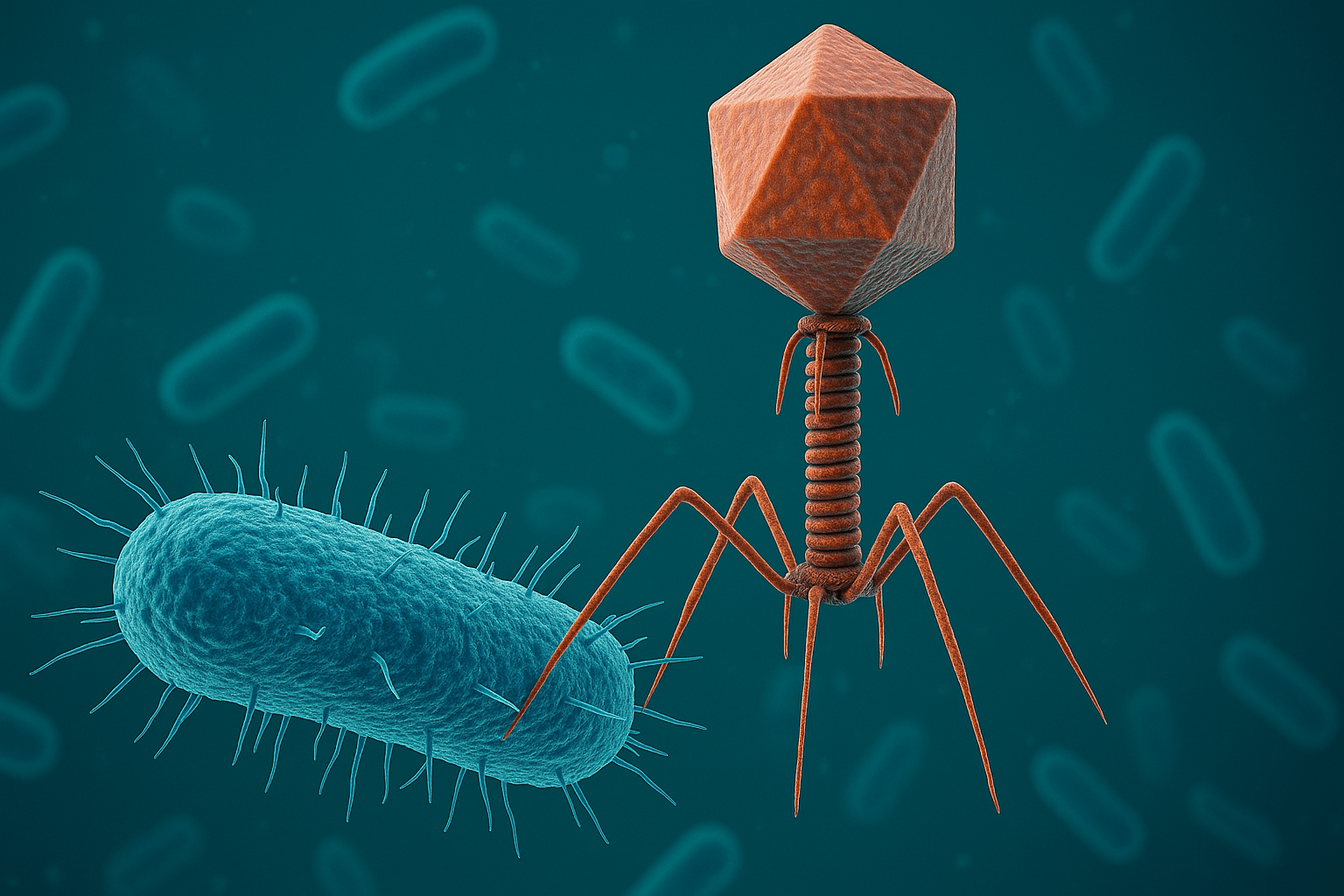
Bacteriophages (phages for short) are viruses that attack bacteria with high specificity. They infect the target cell, reprogram its metabolism, multiply inside, and ultimately cause the bacterium to burst (lysis).
The Advantages of Phage Therapy in This Study:
-
-
Specificity: Unlike broad-spectrum antibiotics, phages attack only the pathogenic strain and leave the beneficial microbiota (gut flora) intact.
-
Self-Amplification: Phages multiply at the site of infection as long as bacteria are present.
-
Biofilm Degradation: Pseudomonas often forms protective biofilms. Phages produce enzymes that can penetrate these layers.
-
In this specific case, no standard medication was used, but rather a personalized therapy. Researchers isolated phages that precisely matched the patient’s bacterial strain.
-
Treatment Duration: 86 days.
-
Administration: Intravenous (directly into the bloodstream).
-
Combination Partner: The phages were administered concurrently with selected antibiotics.
The Phenomenon of Synergy (Phage-Antibiotic Synergy)
A central aspect of the study is the observation that phages and antibiotics together are more effective than the sum of their individual effects. When bacteria attempt to develop resistance against phages, they often have to alter their cell surface. This change frequently leads to them losing their original resistance to antibiotics – a biological “checkmate” move by the physicians.
Study Results: Safety and Efficacy
The clinical evaluation provided important insights for the future application of phage therapy:
-
High Tolerability: Despite the long treatment duration of almost three months, the young child experienced no side effects. This dispels concerns regarding toxicity during systemic application.
-
Immune Response: Although the immune system produced antibodies against the phages, these did not significantly neutralize the therapeutic effect.
-
Reduction of Virulence: Even in samples where bacteria developed some resistance to the phages, these bacteria were significantly less “aggressive” (reduced virulence) and could be better controlled by the body.
-
Successful Re-Transplantation: By controlling the infection, the path was paved for a second, successful liver transplant, which secured the child’s survival.
Scientific Significance for the Future
The publication in Nature Communications is considered a milestone, as it links precise molecular biological data with clinical success in pediatrics.
Implications for Research:
-
Evidence for Personalized Medicine: The study shows that tailored phage cocktails are safe even in highly complex, immunocompromised patients.
-
Alternative to New Antibiotics: Given the slow development of new antibiotic classes, phage therapy offers an immediately available supplement.
-
Regulatory Impulses: Such success stories increase pressure on health authorities to create standardized approval procedures for phage preparations.
Conclusion for Experts and Patients
The targeted combination of bacteriophages and antibiotics is more than an experimental niche solution. It represents a powerful tool to successfully combat even extremely resistant pathogens (XDR). For transplant medicine and pediatrics, this success signifies enormous hope: infections that were considered a death sentence yesterday could be curable tomorrow through the synergy of viruses and active substances.

Author: David Brand
As an author, David Brand is dedicated to providing well-founded education on health topics. His goal is to bring reliable information into focus and help patients better understand complex medical issues. Through thorough research and clear language, he provides orientation in the modern health jungle – always with a focus on verified facts.


