
Antibiogram & phagogram: definition, procedure, and applications
The antibiogram:
Definition:
An antibiogram is the result of antibiotic susceptibility testing. It indicates which antibiotics a specific bacterial pathogen is resistant or susceptible to.
Procedure:
To create an antibiogram, a patient sample is taken, for example by swabbing a wound or collecting urine in the case of a urinary tract infection. This sample is examined for the presence of bacteria. The bacteria found are cultured on an agar plate and exposed to various antibiotics. If the antibiotic can kill the bacterium, this is visible on the agar plate.
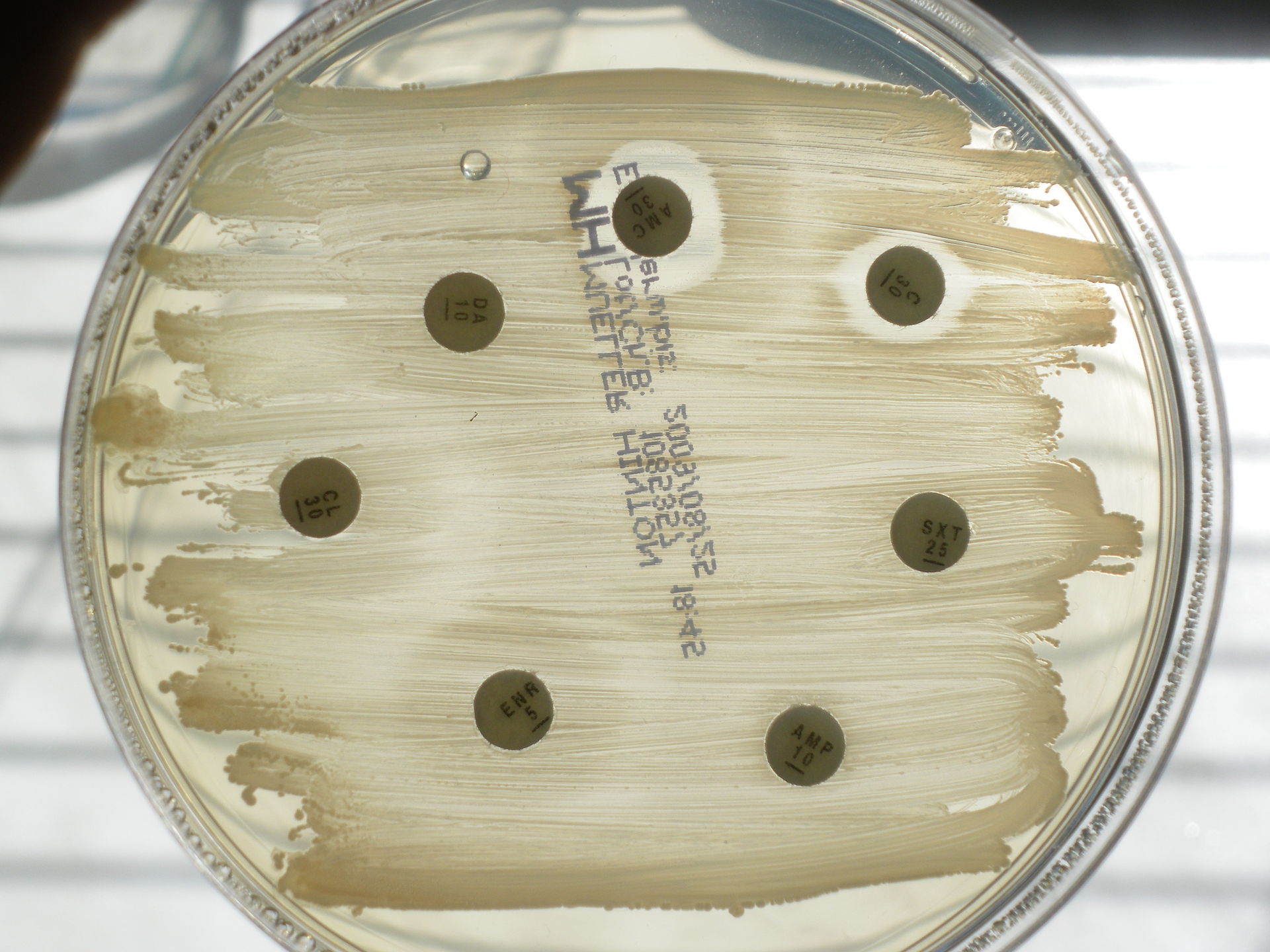
Source: https://de.wikipedia.org/wiki/Antibiogramm
Interpretation:
The result of the antibiogram is interpreted as follows:
S: Susceptible to the tested antibiotic. When using a standard dose and administration, there is a high likelihood of treatment success.
I: Susceptible with increased exposure (“Increased”). Previously also referred to as intermediate susceptibility. Treatment success is possible if higher exposure of the pathogen to the active substance is achieved at the site of infection, e.g., through an adjusted (higher) dose or a different route of administration (IV instead of oral).
R: The microorganism is resistant to the tested antibiotic. Even with increased exposure, the likelihood of treatment failure is high.
Phagogram:
Definition:
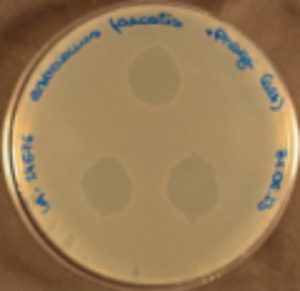
A phagogram is the result of phage susceptibility testing. It indicates which phages a specific bacterial pathogen is resistant or susceptible to.
Procedure:
To create a phagogram, a patient sample is taken, for example by swabbing a wound or collecting urine in the case of a urinary tract infection. This sample is examined for the presence of bacteria. The bacteria found are cultured on an agar plate and exposed to various phages. If the phages can lyse the bacterium, this is visible on the agar plate.
Interpretation
The result of the phagogram is interpreted as follows:
+: Susceptible to the tested phage. When using a standard dose and administration, there is a high likelihood of treatment success.
–: The microorganism is resistant to the tested phage. Even with increased exposure, the likelihood of treatment failure is high.


