
Correlation between the development of phage resistance and initial antibiotic resistance
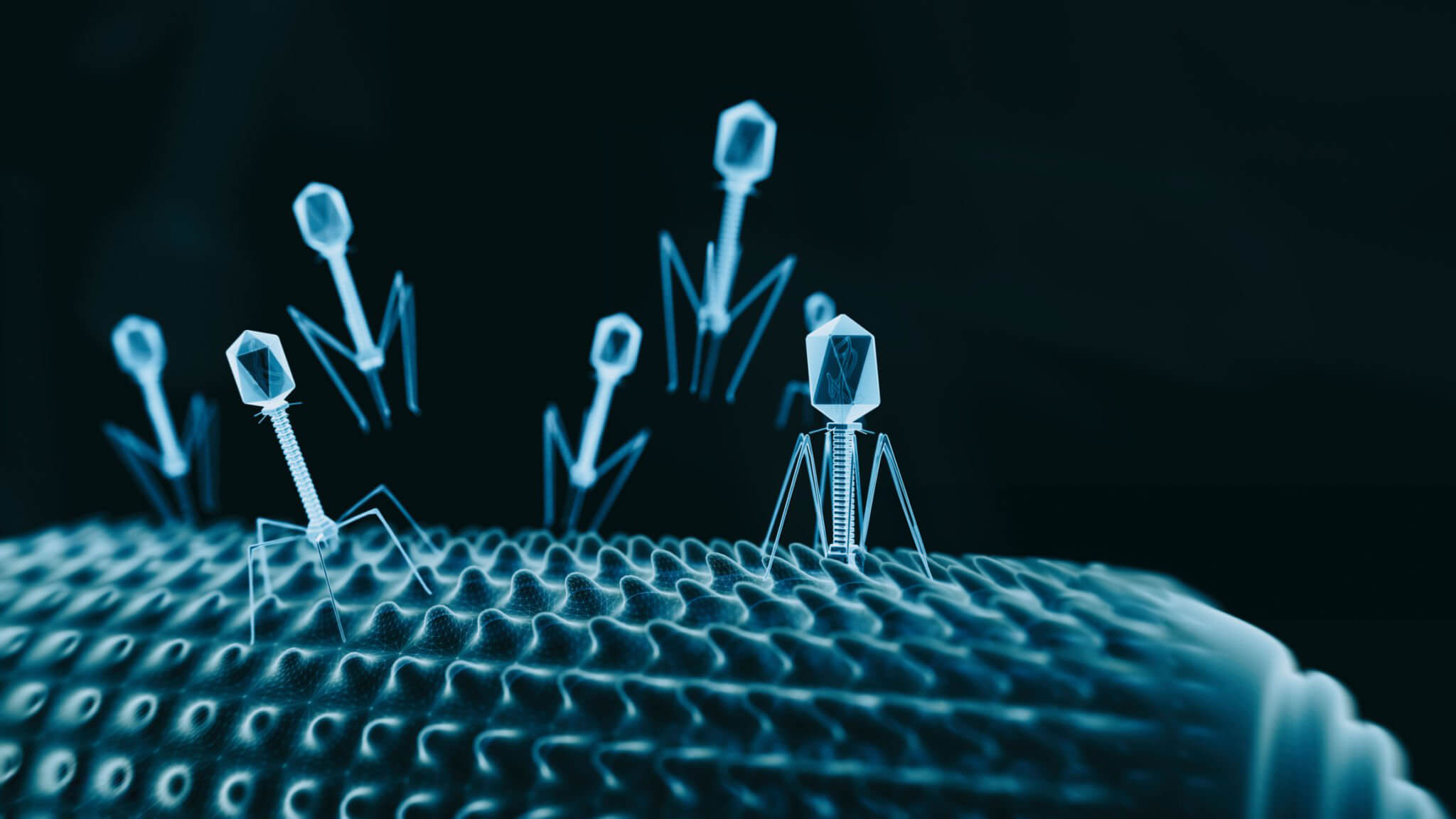
The Evolutionary Trap: How Bacteriophages Circumvent Antibiotic Resistance
In modern medicine, we stand at a turning point. While the discovery of antibiotics almost a century ago ushered in the “Golden Age” of infectiology, we are now in a phase that experts refer to as the “post-antibiotic era.” Bacteria have learned to neutralize our chemical weapons. However, a recent study reveals a fascinating solution: there is a direct correlation between phage resistance and antibiotic resistance that we can utilize therapeutically.
Here, bacteriophage therapy offers not just an alternative, but an evolutionary trap for multidrug-resistant pathogens.
Summary: Key Takeaways
-
Evolutionary Trade-off: Bacteria that become resistant to phages often simultaneously lose their defense mechanisms against antibiotics.
-
PAS Effect: Phage-Antibiotic Synergy enhances lytic activity and breaks down bacterial defenses more efficiently than monotherapies.
-
Re-sensitization: Phages can make “superbugs” sensitive again to drugs that were previously ineffective.
-
Precision: Unlike broad-spectrum antibiotics, phages leave the beneficial microbiome untouched.
-
Future of Infectiology: Combination therapy is one of the most promising antibiotic resistance solutions.
1. The Global Crisis of Antibiotic Resistance
Since Alexander Fleming discovered penicillin in 1928, antibiotics have saved millions of lives. However, bacteria are masters of adaptation. Through horizontal gene transfer and natural selection, they have developed mechanisms to inactivate antibiotics, expel them from the cell, or alter their target structures.
Why Conventional Antibiotics Are Reaching Their Limits
Conventional antibiotics work chemically. They block enzymes, destroy cell wall synthesis, or disrupt protein formation. However, if a bacterium develops resistance, the medication becomes a “toothless tiger.” Globally, over 1.2 million people already die annually directly from infections caused by resistant germs. Without new strategies, this number could rise to 10 million by 2050.
2. Bacteriophages: The Natural Hunters of Bacteria
Bacteriophages (phages for short) are viruses that exclusively infect bacteria. They are highly specialized and recognize their target cells like a key fits a lock.
The Lytic Cycle: Biological Annihilation
As soon as a phage docks onto a bacterium, it injects its genetic material. The bacterial cell is forced to produce hundreds of new phages until it eventually bursts (lysis). This process is highly dynamic – phages co-evolve with bacteria.
Digression: A Look Back – The Legacy of Georgia
While the West almost completely abandoned phage research in favor of antibiotics in the 1940s, it remained vibrant in Eastern Europe, particularly in Georgia. The Eliava Institute in Tbilisi is now the world center for phage applications. For almost 100 years, they have leveraged the experience that phages help even where chemical agents fail. Today, modern biotechnology benefits from this decades-long wealth of experience.
3. The Correlation Between Phage and Antibiotic Resistance
The central question of current research is: What happens when bacteria try to defend themselves against phages? The study Correlation between Phage and Antibiotic Resistance provides a groundbreaking answer.
The Evolutionary “Trade-off”
Bacteria possess a limited amount of energy and resources. To become resistant to phages, they often have to modify their surface receptors or efflux pumps. However, bacteria also use precisely these structures to pump antibiotics out of the cell. The result: If the bacterium becomes resistant to the phage, it “sacrifices” its ability to fend off the antibiotic. Re-sensitization occurs. The superbug becomes vulnerable again to conventional medicine.
4. Scientific Focus: Phage-Antibiotic Synergy (PAS) in Detail
Phage-Antibiotic Synergy (PAS) is more than just the simultaneous administration of two agents. It is a synergistic interaction that brings bacterial defenses to their knees.
Mechanism 1: Stress-Induced Filamentation
Certain antibiotics at sublethal (non-lethal) doses stress bacteria. This causes bacteria to stop dividing and instead grow into long filaments.
This enlarged surface offers phages significantly more “landing sites” for their receptors. Furthermore, in this state, the bacterium is less capable of stopping viral replication internally.
Mechanism 2: Biofilm Disruption
Multidrug-resistant germs often hide in biofilms – tough slime layers that are impenetrable to antibiotics. Phages possess enzymes (depolymerases) that chemically dissolve this matrix. Once the biofilm becomes porous, antibiotics can penetrate inside again and kill the germs living there.
Mechanism 3: Cost Pressure
As mentioned, the pressure from phages forces the bacterium to make a choice. If the antibiotic attacks a vital pump that the bacterium also uses as a phage receptor, the bacterium cannot fend off both attackers simultaneously without drastically reducing its fitness (survivability).
5. Personalized Therapy: The Phagogram
A crucial advantage of bacteriophage therapy is its precision. To ensure this, a phagogram is created. In the laboratory, specific bacteria from a patient are isolated and tested with various phage cocktails. The therapy is only used if lytic activity (dissolution of bacteria) is observed. This prevents – unlike broad-spectrum antibiotics – the destruction of the healthy gut flora.
6. Why We Need New Antibiotic Resistance Solutions
The development of new antibiotic classes is economically unattractive and technologically difficult. Since the 1980s, hardly any new class has been discovered. Phages, however, are an almost inexhaustible resource. They are found wherever bacteria are: in wastewater, rivers, or soil.
The strategy for the future is therefore not “phages instead of antibiotics,” but “phages and antibiotics.” Through the PAS strategy, we can massively extend the lifespan of our existing medications.
7. FAQ – Frequently Asked Questions
1. Does phage therapy also cause resistance? Yes, bacteria can also become resistant to phages. The crucial difference, however, is that phages, unlike static medications, co-evolve. Moreover, resistance to phages often leads to re-sensitization to antibiotics (trade-off).
2. Can phages and antibiotics be taken simultaneously? Yes, this is often even the goal. Phage-Antibiotic Synergy (PAS) shows that the combination of both active substances is usually significantly more effective than individual application.
3. Why is phage therapy not yet standard in Germany? The main problem lies in pharmaceutical law. Phages are biologically active and change, which does not fit into the rigid approval schemes for chemical agents. Currently, application is mostly only possible as an individual healing attempt.
4. Are phages dangerous for humans? No. Phages are extremely specialized. A phage that kills a bacterium cannot even recognize a human cell, let alone infect it. They are as harmless to us as water.
5. How long does phage treatment last? This varies greatly individually. For acute infections, improvement can occur within days. For chronic bone infections or cystic fibrosis, treatment can last weeks or months.
Conclusion: Biology as a Partner in Medicine
The findings on the correlation between phage resistance and antibiotic resistance mark a paradigm shift. We stop fighting bacteria solely with chemical force and begin to strategically exploit their evolutionary weaknesses. Bacteriophage therapy in combination with antibiotics is not only a hope for desperate patients with multidrug-resistant germs but also the logical next step in intelligent 21st-century medicine.
Further Links:
Note: This article is for informational purposes only and does not replace medical advice. For infections, please consult a specialized physician.

Author: Elena Kastner
Elena Kastner is an experienced specialist journalist focusing on health communication. Her focus is on evidence-based reporting and quality assurance of medical information in the digital space. With her expertise, she bridges the gap between scientific depth and practical applicability.


