
The Shield in the Mucus: How Bacteriophages Are Revolutionizing Our Immunity
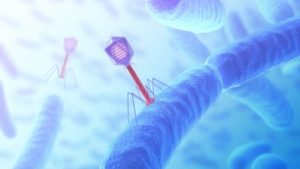
Human biology is a masterpiece of defense. While we often rely on our skin as a barrier, the actual battle against pathogens takes place on the moist surfaces of our bodies: the mucous membranes. A groundbreaking scientific discovery now shows that we are not fighting alone there. A symbiotic alliance between our body and bacteriophages forms an active barrier against pathogenic bacteria.
In an era where conventional antibiotic resistance solutions are increasingly failing, understanding these natural defense mechanisms opens new horizons for bacteriophage therapy.
Summary: Key Takeaways
-
Natural Symbiosis: Bacteriophages specifically accumulate in the mucus and form an additional, non-host immune layer.
-
Preventive Protection: By adhering to mucous membranes, phages intercept invading bacteria before they can infect epithelial cells.
-
Targeted Elimination: Unlike antibiotics, phages only attack specific target bacteria and leave the healthy microbiome intact.
-
PAS Effect: Phage-antibiotic synergy can massively increase the effectiveness of treatments for existing infections.
-
Evolutionary Advantage: This alliance reduces dependence on broad-spectrum antibiotics and counteracts the global resistance crisis.
1. The Hidden World of Mucous Membranes and Phages
Our mucous membranes—whether in the gut, lungs, or reproductive tract—are constantly exposed to billions of microorganisms. The mucus serves not only as a lubricant but as a highly complex filtration and defense system.
The Discovery of the Mucus-Phage Alliance
Recent studies, as outlined on phage.help, show that bacteriophages have a special affinity for mucus. Through specific protein structures in their capsid (the protein shell), they bind to mucins—the main components of mucus.
This results in a much higher concentration of phages in the mucus than in the surrounding environment. These “embedded hunters” wait for pathogenic bacteria to attempt to penetrate the mucus layer. As soon as a target bacterium touches the mucus, the phage strikes, infects it, and multiplies, which even reinforces the protective layer locally.
2. The Limits of Antibiotics and the Global Resistance Crisis
Since the discovery of penicillin, antibiotics have dominated medicine. However, we have misused these chemical weapons as “miracle cures” for too long. Antibiotics usually work by disrupting fundamental bacterial processes such as cell wall synthesis or protein formation.
The Problem of “Clear-Cutting”
A major disadvantage of conventional antibiotics is their lack of selectivity. They act like a wildfire, destroying both pathogens and beneficial bacteria. This destroys the microbiome and weakens the natural mucosal barrier.
The Threat of Multi-Resistance
Bacteria have developed highly efficient strategies to neutralize antibiotics—from enzymes that break down the active ingredient to efflux pumps that transport the drug back out of the cell. The WHO warns that without new antibiotic resistance solutions, we could fall back into a pre-antibiotic era by 2050, where simple infections become fatal.
3. Scientific Focus: Phage-Antibiotic Synergy (PAS)
If an infection has already breached the natural protective layers, the combination of phages and antibiotics offers new hope: phage-antibiotic synergy (PAS).
The Mechanism of PAS in Detail
Scientifically speaking, PAS describes a phenomenon in which the lytic effect (the dissolution of bacteria) by phages is significantly increased in the presence of antibiotics. This occurs through several mechanisms:
-
Cellular Filamentation: Certain antibiotics (in sublethal, i.e., non-lethal doses) stress bacteria so much that they no longer divide but grow into long threads (filaments). These enlarged surfaces provide phages with more space for receptors, which massively increases the infection rate.
-
Biofilm Degradation: Bacteria often hide in biofilms—tough mucus fortresses that are impenetrable to antibiotics. Phages possess enzymes (depolymerases) that chemically dissolve this matrix and clear the way for the antibiotic.
-
Evolutionary Dilemma: If a bacterium wants to become resistant to the phage, it often has to change surface structures that it simultaneously needs for its antibiotic resistance. The bacterium must decide: protection against the phage or protection against the antibiotic? Both at the same time is often biologically too costly.
4. Excursion: From the Beginnings in Georgia to Modern Precision Medicine
The idea of using phages medically is not new. Clinical application began shortly after their discovery by Félix d’Hérelle in the early 20th century. However, while the West relied fully on antibiotics, research on phages was never interrupted in Eastern Europe, particularly in Georgia.
The Eliava Institute: A Historical Advantage
In Tbilisi (Georgia), phages have been used for over 100 years to treat gastrointestinal infections, burns, and surgical wounds. The approach there is often preventive: phages are used in the form of sprays or drinking solutions to reinforce the body’s own mucous membranes during surgeries or disease outbreaks. This rich wealth of experience today forms the basis for the re-integration of bacteriophage therapy into Western evidence-based medicine.
5. Phages as Personalized Medicine: The Phagogram
A key difference between antibiotics and phages is the degree of personalization. While antibiotics are often administered using a “one-size-fits-all” approach, successful phage therapy requires a so-called phagogram.
In this process, bacterial samples from the patient are brought together with various phage cocktails in the laboratory. Only if the phages can dissolve the patient’s specific bacteria is the therapy promising. This precision protects the microbiome and prevents the development of unnecessary resistance—a core element of modern antibiotic resistance solutions.
6. Future Applications: Prevention is the Best Medicine
The realization that phages naturally adhere to mucous membranes opens up revolutionary paths:
-
Inhalable Phages: For patients with cystic fibrosis or chronic bronchitis, phage sprays could line the lungs and prevent Pseudomonas infections before they occur.
-
Oral Preparations: Specific phage cocktails could protect the intestinal flora from pathogenic E. coli strains without disrupting digestion.
-
Topical Gels: During surgical procedures, phage-containing gels could protect the mucous membranes and thus deprive hospital germs (MRSA) of a breeding ground.
FAQ – Frequently Asked Questions
1. How do phages get into our mucus? Phages are present everywhere in our environment and in our food. Our body absorbs them, and through their natural affinity for mucins, they accumulate where they are needed—on our mucous membranes.
2. Does bacteriophage therapy cause side effects? Since phages act highly specifically on bacteria and ignore human cells, they are extremely well tolerated. Occasionally, the mass die-off of bacteria can lead to brief immune reactions, which are usually milder than the side effects of antibiotics.
3. Why is phage-antibiotic synergy (PAS) so important? Because it allows for the reduction of antibiotic doses while simultaneously restoring their effectiveness against resistant germs. It is an alliance of biology and chemistry against the “superbug.”
4. Can bacteria not also become resistant to phages? Yes, bacteria can develop resistance. However, phages evolve along with them. Furthermore, phage resistance often leads to the bacteria losing their resistance to antibiotics (a process called “trade-off”).
5. Where can I receive phage therapy? In Germany, phage therapy is currently mostly accessible only through individual compassionate use or within the framework of clinical trials. However, countries like Georgia or Poland have specialized clinics for international patients.
Conclusion: Returning to Natural Protection
The discovery of the mucus-phage alliance teaches us an important lesson: Nature already has solutions for problems that we laboriously try to solve with chemistry. By understanding how phages protect our mucous membranes, we can use bacteriophage therapy not just as an emergency solution, but as a preventive force.
Phage-antibiotic synergy provides us with the tool to dispel the dark cloud of the global resistance crisis and shape a future in which bacterial infections are manageable once again.


